When excavation begins, most of the attention is on what is happening above ground. Machinery arrives, soil starts moving and the site begins to take shape. What is less visible, but often far more important, is the network of underground services running beneath the surface. Power cables, gas lines, water mains, sewer pipes, stormwater drains and communications infrastructure can all pass through a site, and any one of them can affect safety, timing and the way work needs to be carried out. JBS Excavation & Retaining Walls understands that buried utilities can significantly affect how excavation in Mornington Peninsula is planned, staged and carried out.
In this article, you will learn how professional contractors work around underground services with care and precision. You will see how utilities are identified before digging starts, why locating and potholing matter and how excavation methods are adjusted to reduce the risk of damage, delays and serious safety incidents. By the end, you will have a clearer understanding of what safe excavation around buried services should involve and why it is such an important part of keeping a project on track.
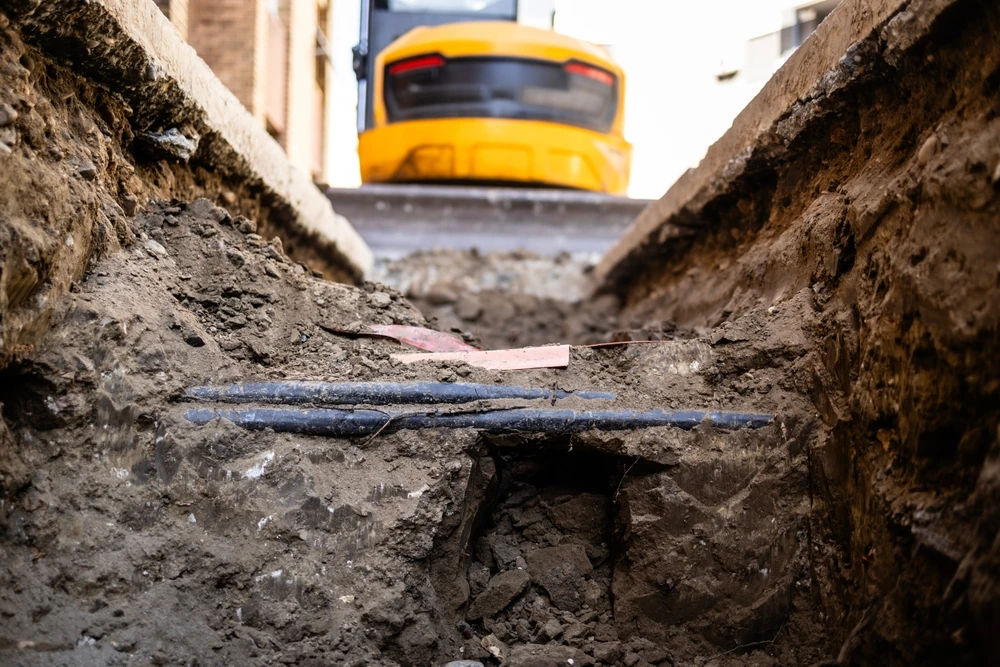
Underground utilities can turn a routine excavation into a much more complex operation. Electrical cables, gas lines, water pipes, sewer services, stormwater systems and telecommunications infrastructure are often buried at different depths and in positions that may not exactly match available plans. On older sites, there may also be undocumented repairs, private service lines, abandoned assets or past alterations that make the underground layout even less predictable.
The risk is not limited to striking a service directly. Excavating too close to a buried asset can disturb the soil supporting it, expose it to damage or compromise nearby infrastructure that depends on stable ground conditions. On sites where multiple services run through the same corridor, one mistake can affect several assets at once. What appears to be a straightforward dig can quickly become a serious safety issue, a costly repair job or a delay that disrupts the wider project.
Electrical cables are among the most dangerous underground services to work around. Damaging a live cable can lead to electric shock, severe burns, arc flash or fire, and the consequences can be immediate and catastrophic. A strike can also interrupt power to surrounding homes, businesses or public infrastructure, creating wider disruption beyond the site itself.
Gas lines present a different but equally serious risk. A damaged gas service can release flammable gas into the excavation, surrounding soil or nearby buildings. If an ignition source is present, that leak can result in fire or explosion. Even a relatively small puncture can become a major hazard if the gas migrates through the ground and accumulates in enclosed areas. Because these risks can escalate quickly, excavation near electrical and gas infrastructure requires strict controls and a very cautious approach.
Water services can cause significant problems when they are hit or undermined during excavation. A broken water main or service line can flood the trench, soften the ground and wash away the support that nearby structures, pavements or other utilities rely on. In some cases, this kind of failure can destabilise a much larger area than the original excavation footprint.
Sewer and stormwater lines bring additional health, environmental and structural concerns. Damage to these assets can release contaminated water into the excavation or surrounding soil, which may require specialised clean-up and disposal measures. Some failures are not obvious straight away. A cracked pipe or disturbed connection may continue working for a time before collapsing, leaking or causing a blockage later. That delayed damage can be just as costly as a direct strike.
Telecommunications and data cables may not pose the same direct life-safety risks as electricity or gas, but damaging them can still create major problems. Internet, phone, alarm, CCTV and business systems often rely on buried communications infrastructure, and a single cut cable can interrupt services across multiple properties.
The consequences can go well beyond inconvenience. Communication outages can stop business operations, disrupt payment systems, affect security monitoring and create urgent callouts from service providers. For contractors, these incidents can lead to repair costs, project delays and reputational damage. That is why communication services need to be treated with the same care and respect as any other buried utility.
Plans and service records are an essential starting point, but they are not enough on their own. Underground utility information often shows the approximate route of a service rather than its exact position or depth. Older properties may contain undocumented works, rerouted lines or private installations that do not appear on standard records. Ground levels may also have changed over time, which can affect the actual depth of buried services.
Because of this, safe excavation depends on more than reviewing paperwork. Contractors need to combine available records with on-site observations, utility locating and physical verification before excavation proceeds near high-risk areas. Treating plans as a guide rather than a guarantee is one of the most important parts of reducing risk.
Before excavation begins, contractors need to build a reliable understanding of what lies beneath the site. This usually involves a staged process that starts with gathering utility information and then moves into on-site locating and service verification. Each step helps reduce uncertainty and gives the excavation crew a clearer picture of where caution is required.
This is not a single-action task. It is a layered process designed to compare records with real site conditions. The aim is to avoid discovering utilities by accident once machinery is already working in the ground.
The first stage is to request available underground service information before any digging starts. Contractors commonly obtain plans through Before You Dig Australia and review them alongside site plans, surveys, title information and any relevant as-built documentation from previous works. Visible surface features such as pits, hydrants, inspection points, valve covers and communication markers are also checked because they often help confirm where services may be running.
At this stage, experienced contractors are not just looking for the marked utility routes. They are also looking for limitations in the information provided. Plan age, scale, disclaimers and missing details all matter. Recognising where uncertainty exists is just as important as identifying what is already known.
Once the available documentation has been reviewed, the next step is on-site locating. Contractors use specialised locating equipment to trace the likely path of buried services and compare those results with the records already gathered. Metallic pipes and cables can often be traced with electromagnetic locating equipment, while other methods may be required for non-metallic assets depending on the site and service type.
Once likely service routes have been identified, they are marked on the ground surface using paint, flags or other visible markers. These markings give operators and ground crews a clearer visual reference before excavation starts. They do not remove the need for caution, but they provide a practical working map that helps the team understand where higher-risk areas are located.
Locates and surface markings are useful, but critical services often need to be physically verified before bulk excavation begins nearby. This is where potholing becomes important. Potholing involves carefully exposing a service at selected points so its actual position and depth can be confirmed.
This is often done using non-destructive methods such as vacuum excavation, which allows soil to be removed with much less risk than conventional digging directly over the asset. Once exposed, the service can be visually checked, recorded and protected while surrounding excavation is planned. This step removes much of the guesswork from the job and makes it easier to decide where machines can work and where hand or vacuum methods should continue.
Excavation around buried services is safest when contractors use methods that match the level of risk. There is no single approach that suits every site. The right method depends on the service type, soil conditions, access constraints, weather, excavation depth and how much certainty there is about the utility location.
A skilled excavation crew adjusts its methods as more information becomes available. This flexibility is essential because underground conditions often change from one part of the site to another.
Hand digging remains one of the most reliable ways to work close to identified underground services. In higher-risk zones, especially around marked or exposed utilities, machinery may be stopped and the remaining soil removed carefully by hand. This gives the crew much better control and reduces the chance of a sudden strike.
The process is usually slow and deliberate. Soil is removed in shallow layers so that any buried asset can be uncovered gradually rather than hit unexpectedly. Once the service is visible, it can be checked for direction, depth and condition before excavation continues nearby. While hand digging takes more time, it is often the safest option where precision matters most.
Vacuum excavation is widely used where the consequences of damaging a service are high or where several utilities run close together. These methods remove soil in a more controlled way than mechanical excavation and are particularly useful for potholing and exposing buried assets without direct contact from a bucket or tooth.
Hydro excavation uses pressurised water to break up the soil, while air excavation uses compressed air. In both cases, the loosened material is removed by vacuum. These approaches help reduce the likelihood of damaging services during the exposure process and are especially useful in congested utility corridors or other sensitive excavation zones.
Mechanical excavation still has a place on most projects, but it must be carefully managed around underground services. Before machines are allowed to work near a buried asset, contractors usually need to verify where that service is and determine how much clearance is available. In many cases, services are first exposed by potholing so machinery can then work beside them rather than directly over them.
Operators working near utilities need to use smaller, more controlled movements and stay in close communication with the rest of the crew. Spotters may be required, and excavation methods may need to change immediately if an unrecorded service is found or if actual site conditions differ from expectations. Safe mechanical excavation depends on control, patience and constant awareness of what is happening below ground.
Careful excavation planning is one of the most effective ways to avoid utility strikes and the delays that follow them. Good planning does more than identify where services might be. It also sets out how excavation should proceed, where high-risk zones are located, what method should be used in each area and what steps apply if unexpected infrastructure is uncovered.
This planning helps protect more than the utilities themselves. It protects project budgets, timelines, site access, surrounding properties and worker safety. It also reduces the risk of emergency repair callouts, temporary service outages and rework that could have been avoided with better preparation.
Even the best plan is only effective if the people on site understand it. Operators, labourers, supervisors and subcontractors all need to know where underground services are likely to be, what markings mean and which excavation methods apply in different areas of the site. Clear communication before and during excavation is essential.
This includes discussing the sequence of works, confirming who is responsible for spotting or checking service locations and making sure everyone understands what to do if an unknown asset is found. When crews are informed and working to the same process, the excavation is far less likely to be derailed by preventable mistakes.
Safe excavation around underground utilities is never based on luck. It begins with reviewing available service information, identifying likely utility paths, verifying critical locations through potholing and choosing excavation methods that suit the level of risk. It also depends on clear communication, patient work practices and a willingness to slow the job down where the consequences of a mistake are high.
For JBS Excavation & Retaining Walls, protecting underground services is part of carrying out excavation work to a professional standard. When buried infrastructure is properly identified, respected and worked around with care, the result is a safer site, fewer unexpected delays and a more controlled outcome for the project as a whole.

