Building retaining walls on the Mornington Peninsula requires sustainable material choices and smart design to ensure long-term strength, stability and minimal environmental impact. This guide is for homeowners, builders and developers planning retaining walls in Mornington Peninsula properties who want solutions that perform reliably in coastal and sloped conditions. It matters because poorly designed or unsuitable retaining walls can fail early, cause drainage issues and lead to costly repairs, especially in areas with reactive soils and seasonal rainfall.
At JBS Excavation & Retaining Walls, we see firsthand how the right materials and site-specific design make a lasting difference, and in this article you will learn which sustainable materials perform best, when timber is suitable and how thoughtful design can extend the lifespan of your retaining wall naturally.
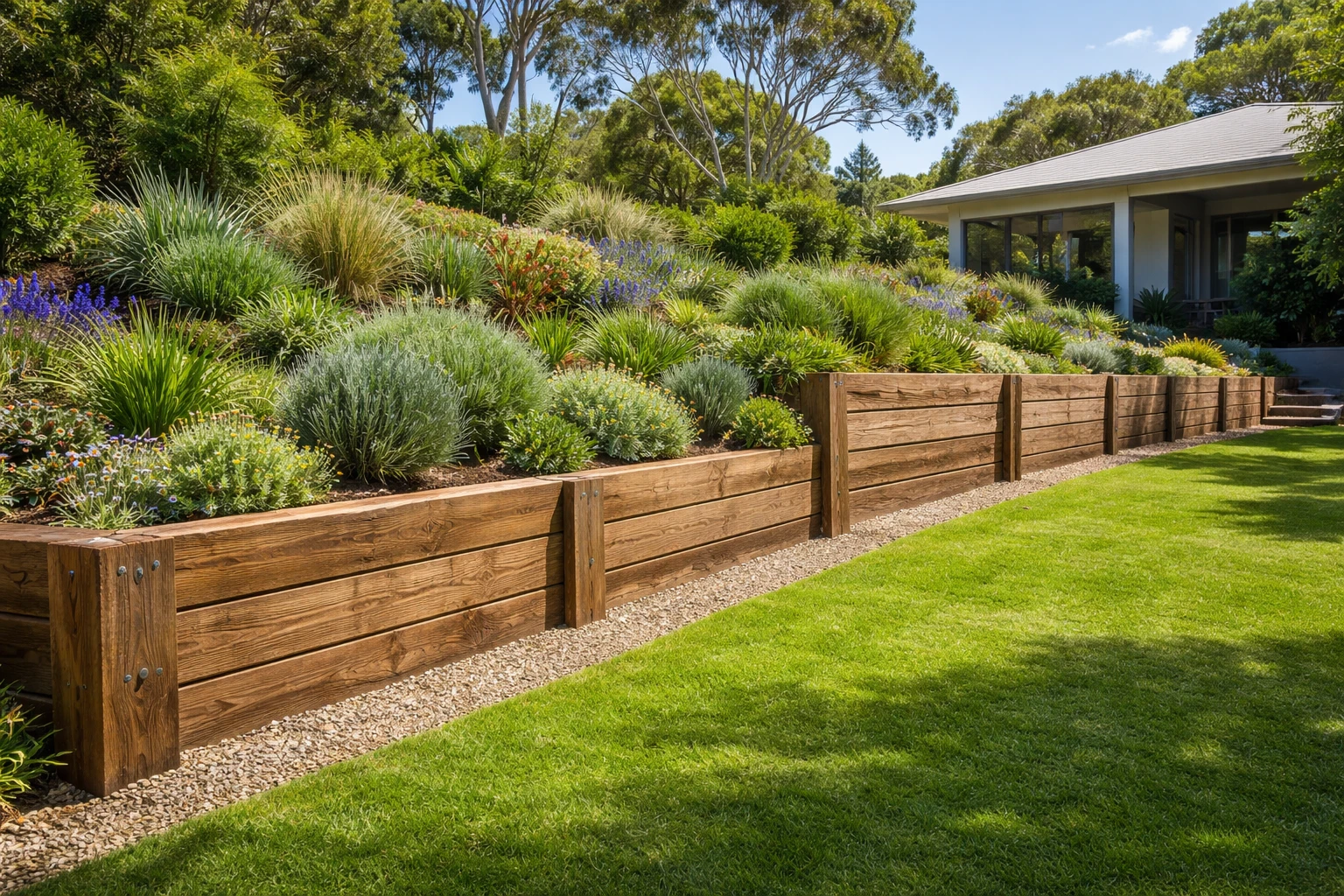
Sustainable retaining wall construction begins with selecting materials that balance environmental responsibility with structural performance. On the Mornington Peninsula, retaining walls are often exposed to moisture, coastal air and varying soil conditions, all of which can accelerate wear if the wrong materials are used. Choosing materials that perform well long-term reduces the need for repairs, rebuilds and material waste.
Durable materials also support sustainability by lowering maintenance demands and extending the usable life of the structure. When materials are chosen based on wall height, soil pressure and site conditions, retaining walls can perform reliably for decades while minimising environmental impact.
Concrete remains one of the most widely used retaining wall materials across Australia due to its strength, versatility and longevity. Concrete sleeper retaining walls and reinforced concrete walls are particularly effective for higher walls and sites with significant soil pressure. They resist moisture damage, cope well with ground movement and require minimal ongoing maintenance when engineered and installed correctly.
Natural stone is a highly durable option that suits many Mornington Peninsula properties, particularly those in coastal or rural settings. Stone retaining walls allow for natural drainage between joints and provide excellent resistance to erosion. When built with proper footings and compacted backfill, stone walls offer both long-term stability and a timeless appearance that blends well with the surrounding landscape.
Recycled materials are becoming an increasingly popular choice for environmentally conscious projects. Reclaimed concrete sleepers, recycled aggregates and repurposed masonry products help reduce landfill waste while still delivering strong structural performance. When these materials are supported by correct drainage systems and engineering design, they can provide a sustainable and cost-effective alternative without compromising durability.
Timber retaining walls can be appropriate in certain situations, particularly for low-height walls used in garden landscaping or decorative features. Treated hardwood and pine sleepers may suit applications where soil loads are light, wall heights are limited and drainage is well managed. Timber can also appeal to property owners looking for a natural aesthetic or lower upfront costs.
However, timber has clear limitations in coastal environments like the Mornington Peninsula. Prolonged exposure to moisture, salt air and soil contact increases the risk of rot, warping and termite damage over time. While treated timber improves resistance, it still has a shorter lifespan than concrete or stone. For structural retaining walls or higher installations, more durable materials provide better long-term value and reliability.
Material selection alone is not enough to ensure a retaining wall performs well long-term. Design plays a critical role, particularly in regions with sloping blocks, varied soil profiles and seasonal rainfall. The Mornington Peninsula presents unique challenges that require retaining walls to be engineered for movement, drainage and erosion control.
A well-designed retaining wall works with the natural landscape rather than resisting it. By addressing site-specific conditions from the outset, retaining walls can maintain their structural integrity while reducing environmental impact and maintenance requirements.
Poor drainage is one of the leading causes of retaining wall failure. When water accumulates behind a wall, hydrostatic pressure builds and places excessive force on the structure. This can result in cracking, leaning, or complete failure, particularly on sloped blocks where water naturally flows downhill.
Effective retaining wall design includes agricultural drainage pipes installed behind the wall, free-draining backfill materials such as crushed rock and correctly sized footings based on soil classification. These measures allow water to drain away efficiently and help the wall accommodate natural soil movement caused by seasonal expansion and contraction.
Erosion control is essential for protecting retaining walls over time. Heavy rainfall can wash away topsoil above the wall, increasing pressure and exposing footings if erosion is not properly managed.
Natural erosion control methods such as planting native ground covers, grasses and deep-rooted vegetation help stabilise soil and reduce surface runoff. Incorporating stepped landscaping, proper surface water diversion and permeable finishes further supports the retaining wall. These strategies not only extend the lifespan of the structure but also enhance the overall appearance and environmental performance of the property.
Retaining walls in Victoria are subject to specific planning and building regulations, particularly when walls exceed certain heights or affect neighbouring properties. On the Mornington Peninsula, council requirements can vary depending on zoning, slope, proximity to boundaries and potential impacts on drainage or soil stability. Understanding approval requirements early helps prevent delays, redesigns and unexpected costs during construction.
Compliance is not only about meeting legal obligations but also about ensuring the retaining wall is structurally sound and safe over the long term. Walls that are properly approved and engineered are far less likely to experience movement, drainage failure, or disputes with adjoining property owners.
In Victoria, retaining walls generally require a building permit if they exceed one metre in height or if they are close to a boundary and could affect adjoining land. A permit may also be required if the wall is supporting a surcharge, such as a driveway, structure, or additional fill.
On the Mornington Peninsula, local councils may also require planning approval in areas affected by overlays such as:
It is important to confirm requirements with the local council before construction begins, as unapproved retaining walls can result in stop-work notices or enforcement action.
Most retaining walls that require approval must be designed or certified by a qualified engineer. Engineering documentation typically addresses wall height, footing design, soil classification, drainage systems and load considerations. This is particularly important in areas with reactive clay soils or sloping terrain, which are common across the Mornington Peninsula.
Retaining walls must also comply with relevant Australian Standards and the Victorian Building Regulations. Proper drainage design is a key compliance factor, as poorly managed water runoff can impact neighbouring properties and lead to structural failure.
Retaining walls built near or on property boundaries require additional care. If a wall supports soil from one property and affects another, written agreements or consent from neighbouring owners may be required. In some cases, councils may request evidence that drainage and structural design will not negatively impact adjoining land.
Early consultation with surveyors, engineers and council planners can help avoid disputes and ensure the retaining wall meets both regulatory and practical requirements.
A retaining wall is a long-term investment that should deliver strength, stability and peace of mind. By combining durable materials with thoughtful design and effective drainage, retaining walls can withstand the demanding conditions of the Mornington Peninsula. At JBS Excavation & Retaining Walls, our focus is on building retaining walls that respect the local environment, meet structural requirements and provide reliable performance for years to come.

