Site evaluation is the foundation of every successful excavation in Mornington Peninsula, shaping how safely, efficiently and accurately work can proceed. Understanding soil conditions, slopes, access, drainage and constraints before excavation begins is what prevents costly delays and structural issues later on. At JBS Excavation & Retaining Walls, we see time and again that thorough upfront assessment is what keeps projects compliant, on schedule and within budget.
This guide is for homeowners, builders and developers planning earthworks, foundations or retaining structures on varied coastal and residential sites. From reactive clays and sandy soils to steep blocks and tight access, sites leave little room for assumptions.
This article explains how professional site evaluation is carried out and how these factors influence excavation methods, machinery selection, safety controls and realistic project timelines.
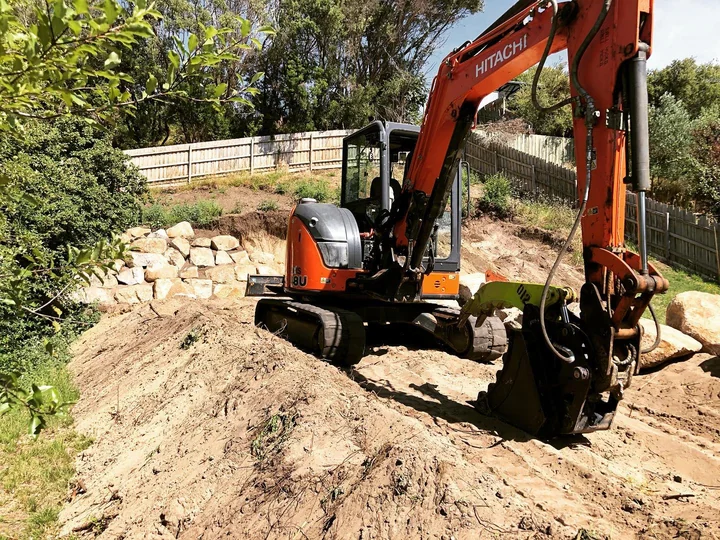
Before any machinery enters a site, a clear understanding of what lies beneath and around the ground is essential. We assess soil type, moisture behaviour and bearing capacity to determine how the ground will respond once excavation begins. On the Mornington Peninsula, conditions can vary from sandy coastal soils to highly reactive clays, even within the same suburb. Identifying these conditions early allows the excavation approach to be matched precisely to the site.
Drainage patterns and slope are just as critical as soil composition. We examine how surface water and groundwater move across and through the block, particularly on sloping sites where runoff and erosion can quickly become structural risks. Understanding fall, stability and water flow informs decisions around cut-and-fill limits, battering, temporary shoring and long-term retaining wall performance. This level of assessment is what prevents ground movement, drainage failures and expensive corrective work later in the project.
Soil composition is one of the first and most important factors assessed on any excavation site. Different soil types respond very differently when excavated and loaded, particularly when moisture levels change. Well-graded sands and gravels typically offer good drainage and bearing capacity, while clays can retain water, soften quickly and expand or shrink with seasonal conditions. Organic topsoil, although valuable for landscaping, has no structural value and must be removed to expose competent subgrade.
Equal attention is given to soil layering beneath the surface. A firm upper layer can easily mask weaker or looser materials below, creating a false sense of stability if not properly identified. As test holes are dug or existing cuts examined, changes in colour, texture, density and moisture content are closely reviewed to identify transitions between layers. Any evidence of uncontrolled fill, mixed materials or poorly compacted backfill signals the need for over-excavation, re-compaction or engineered ground improvement before construction proceeds.
Surface drainage patterns are assessed to understand how rainfall moves across the site, where water naturally collects and how quickly it dissipates after heavy weather. Low points, soggy ground, erosion lines and sediment deposits all provide valuable clues about drainage behaviour. Poor surface drainage can rapidly undermine otherwise stable excavations if not addressed early.
Groundwater and subsurface moisture are just as critical. Saturated soils lose strength and can become highly unstable once exposed. Indicators such as seepage in existing cuts, consistently wet soils at shallow depths, rust staining or mineral deposits suggest ongoing moisture presence or perched water tables. Where necessary, drainage solutions such as subsoil drains, weep holes behind retaining walls or base drains are incorporated to relieve water pressure and maintain ground stability.
The natural slope of a site strongly influences excavation methods and risk management strategies. On flat or gently sloping land, the focus is typically on bearing capacity, drainage and uniform ground support. As slopes increase, additional considerations come into play, including erosion control, lateral soil pressures and the impact of excavation on overall ground stability. Every cut alters the balance of forces within the soil, particularly on constrained or elevated sites.
Slope angle, height of existing banks and vegetation condition are carefully assessed as part of this process. Excavation planning also accounts for proximity to boundaries, nearby structures and imposed loads from buildings, vehicles or stockpiled materials. These factors determine whether simple battering is sufficient or if staged excavation, temporary shoring or engineered retaining solutions are required to maintain safety and long-term performance.
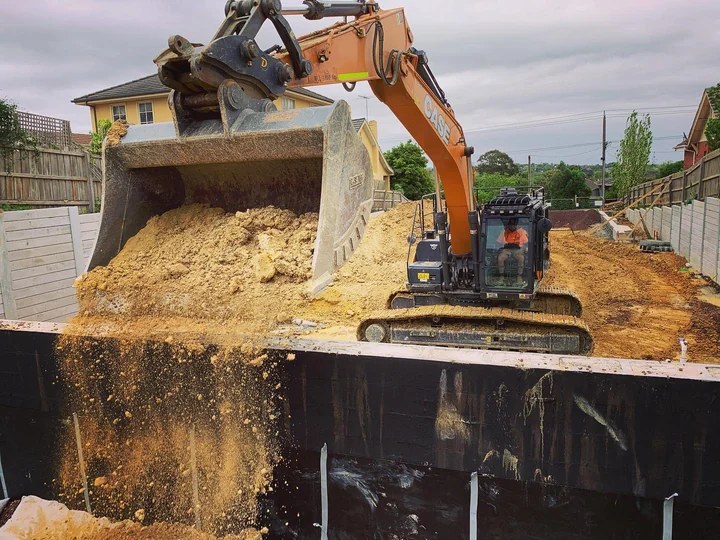
Before any machinery arrives on site, thorough pre-construction checks are treated as essential, not optional. We regularly see that the most expensive delays on projects occur before excavation even begins, often due to overlooked approvals, unverified services or unresolved access constraints. Addressing these items early allows excavation works to start smoothly and progress without interruption. It also reduces the risk of emergency stoppages once the ground is opened.
These checks focus on confirming site readiness from a practical and regulatory standpoint. We verify underground services, access routes, boundary conditions, engineering requirements and council or authority approvals before committing equipment and labour. Coordinating these in advance helps align excavation methods, machinery selection and sequencing with real site conditions. The result is a safer, more predictable excavation process that protects timelines, budgets and neighbouring properties.
Identifying underground services is the first step before any excavation work begins. It is common to encounter water, gas, electricity, NBN, stormwater and legacy services in unexpected locations, particularly on older or subdivided blocks. A Dial Before You Dig enquiry is always lodged and reviewed to establish known services and authority records. However, plans alone are not treated as definitive without physical verification.
Where uncertainty exists, on-site service locating and potholing are carried out to confirm exact service positions and depths. Physically exposing services before excavation near critical infrastructure reduces the risk of strikes. Service damage can instantly halt a project and escalate into safety incidents, emergency call-outs and regulatory investigations. Proper service identification protects workers, nearby properties and the overall project timeline.
Effective excavation relies on clear and practical access planning from the outset. Many sites present challenges such as narrow coastal streets, steep or shared driveways, battle-axe configurations and soft sandy ground. These conditions directly affect the type and size of machinery, truck movements and site set-up requirements. Assessing access constraints early prevents costly mobilisation changes once work is scheduled.
Access widths, overhead power lines, tree canopies and turning requirements for trucks are reviewed in detail. Where constraints are identified, equipment selection, track protection or alternative truck configurations are planned in advance. Excavation works affecting footpaths, nature strips or on-street parking are also reviewed against council and traffic management requirements. Resolving these matters early avoids delays caused by unapproved access or incomplete permits.
Understanding subsurface conditions beyond the topsoil layer is essential for safe and efficient excavation. Geotechnical reports are reviewed to guide excavation depth, shoring needs and sequencing. In the absence of formal reports, visible site indicators are assessed to identify potential stability or water-related risks.
Spoil management is planned alongside excavation methods. Volumes of material to be removed are confirmed early, along with the classification of spoil as clean fill, mixed material or potentially contaminated waste. Suitable tip sites, transport logistics and truck capacity are arranged before excavation begins. This planning prevents situations where excavation is ready to proceed but material cannot be legally or efficiently removed.
Excavation accuracy depends on verified alignment between design documentation and site conditions. Before work begins, design drawings are reviewed against survey information to confirm boundaries, finished levels, retaining wall locations and setbacks. Licensed surveyors are engaged where required to mark critical reference points and levels. This process ensures excavation works are carried out precisely as intended.
Even minor discrepancies at the excavation stage can lead to major structural, drainage or compliance issues later in the build. Confirming that design intent, survey control and on-site conditions all align allows excavation to proceed without interruption. Clear verification reduces the risk of redesigns, disputes or rework once the ground is opened. It also provides confidence that excavation supports the broader construction sequence without unnecessary delays.
Every successful excavation project starts with the quality of planning done before any ground is broken. Thorough site evaluation allows safe, compliant and cost-effective excavation solutions to be designed from the outset. In a region shaped by coastal conditions, variable geology and tight residential sites, this level of preparation is essential to preventing future movement, erosion and costly rework. At JBS Excavation & Retaining Walls, that upfront diligence is how stable, well-engineered foundations are delivered, giving projects the confidence to perform for the long term.

