Cracks, bulges and leaning sections in a retaining wall are rarely cosmetic concerns. They can indicate that the structure is under pressure or that conditions behind or beneath the wall have changed. For property owners with retaining walls in Mornington Peninsula, recognising these warning signs early can help prevent more extensive damage, safety risks and costly repairs.
This article explains the most common causes of retaining wall movement. It also explores what different types of cracks and deformation can reveal about a wall’s condition, when repairs may be sufficient and when replacement becomes the safer option. With expertise from JBS Excavation & Retaining Walls, the guide provides a clearer understanding of how retaining walls respond to the pressures placed upon them and why early intervention is often the most effective solution.
Cracks, bulging sections and noticeable leaning are warning signs that a retaining wall may be under more stress than it can safely manage. These symptoms can point to drainage problems, structural design issues, ageing materials, poor construction or movement in the ground behind or beneath the wall.
Understanding what each type of movement usually indicates can help determine how urgent the problem is and what type of intervention may be needed. In some cases, targeted repairs and drainage improvements may be enough. In more serious cases, the wall may need to be rebuilt to safely retain the ground behind it.
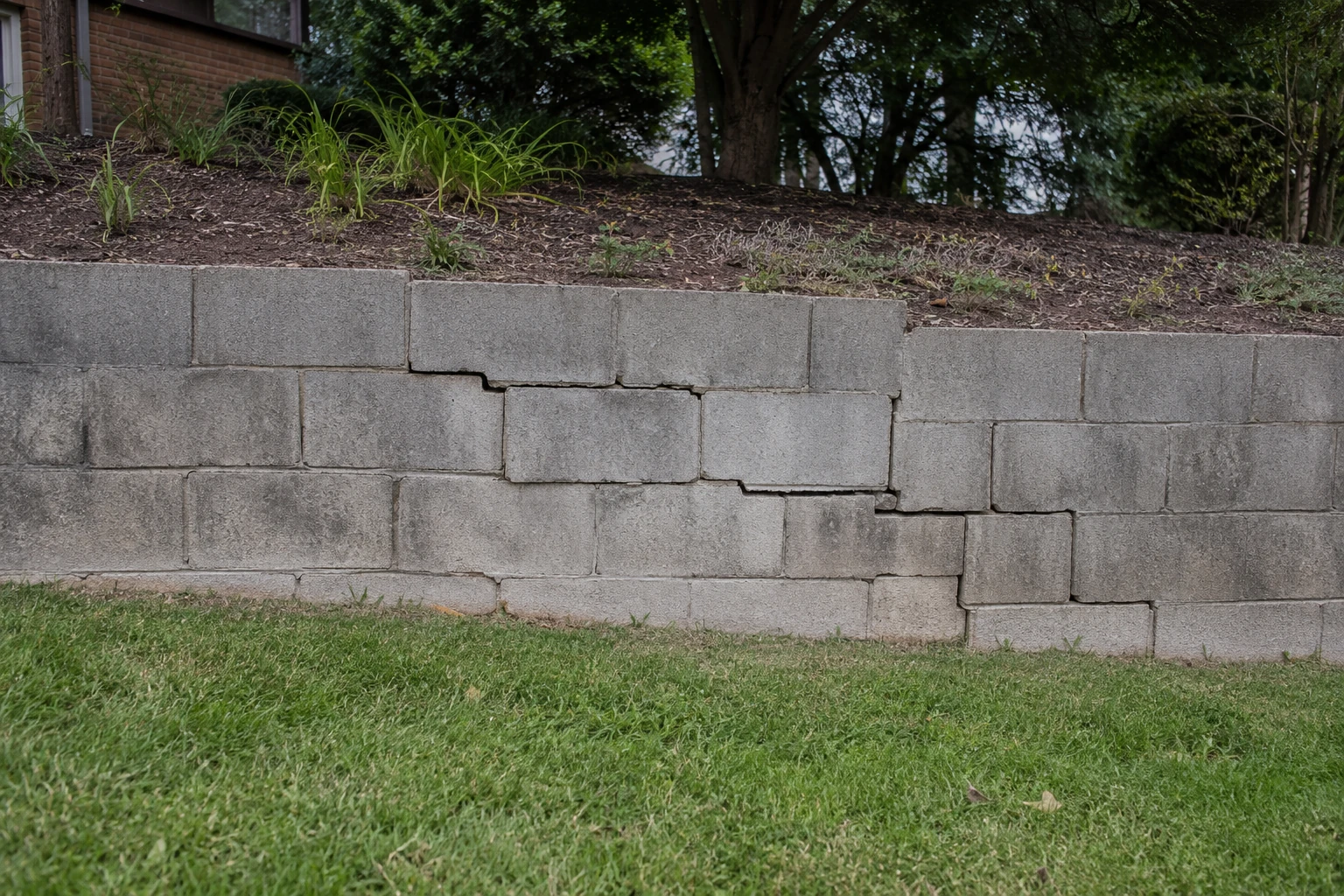
Not all cracks mean a retaining wall is about to fail, but cracks should still be monitored. Their size, direction and whether they are changing over time can reveal a lot about the wall’s condition.
Fine hairline cracks in mortar joints or block faces can sometimes result from minor shrinkage, ageing materials or small seasonal ground movements. These may be relatively minor, but they can still allow water to enter the wall and worsen deterioration over time.
Larger cracks are more concerning. Vertical cracks that widen towards the top may indicate that part of the wall is rotating outward due to pressure from behind. Diagonal or stair-step cracks in masonry often suggest uneven settlement of the footing or base, sometimes due to poor compaction, soft soil or localised movement. Horizontal cracks along the length of the wall are particularly serious, as they often indicate that the wall is being pushed outward by pressure from saturated soil.
Cracks that are wide enough to insert a coin, are growing over time or are accompanied by bulging or leaning should be assessed promptly by a retaining wall specialist or structural engineer.
A bulge or outward bow in a section of wall usually indicates that soil pressure is exceeding the wall’s capacity in that area. Even if the bulge appears small, it shows that the wall has already moved.
Bulging can be caused by:
Leaning is usually more serious, especially when the wall is leaning outward along most or all of its length. This often points to broader instability rather than a localised defect.
Leaning may be caused by chronic hydrostatic pressure, an undersized wall design, inadequate footing depth, weak bearing soil, long-term timber decay or corrosion of steel components. A lean that is visible to the eye, appears to be increasing or is accompanied by gaps between the wall and nearby paving should not be ignored.
Poor drainage is one of the most common reasons a retaining wall starts to crack, lean or bow. When water cannot escape from behind the wall, it builds up as hydrostatic pressure. This pressure pushes directly against the wall and can exceed what the structure was designed to handle.
Water can build up behind a retaining wall when:
As soil becomes saturated, it becomes heavier and places greater outward force on the wall. Constant moisture can also soften the soil supporting the footing, which may cause the wall to rotate, settle unevenly or lose support at the base.
Signs of drainage-related pressure may include horizontal cracking, water seeping through joints, bulging in the middle of the wall, efflorescence on blockwork or soggy soil near the wall after rain.
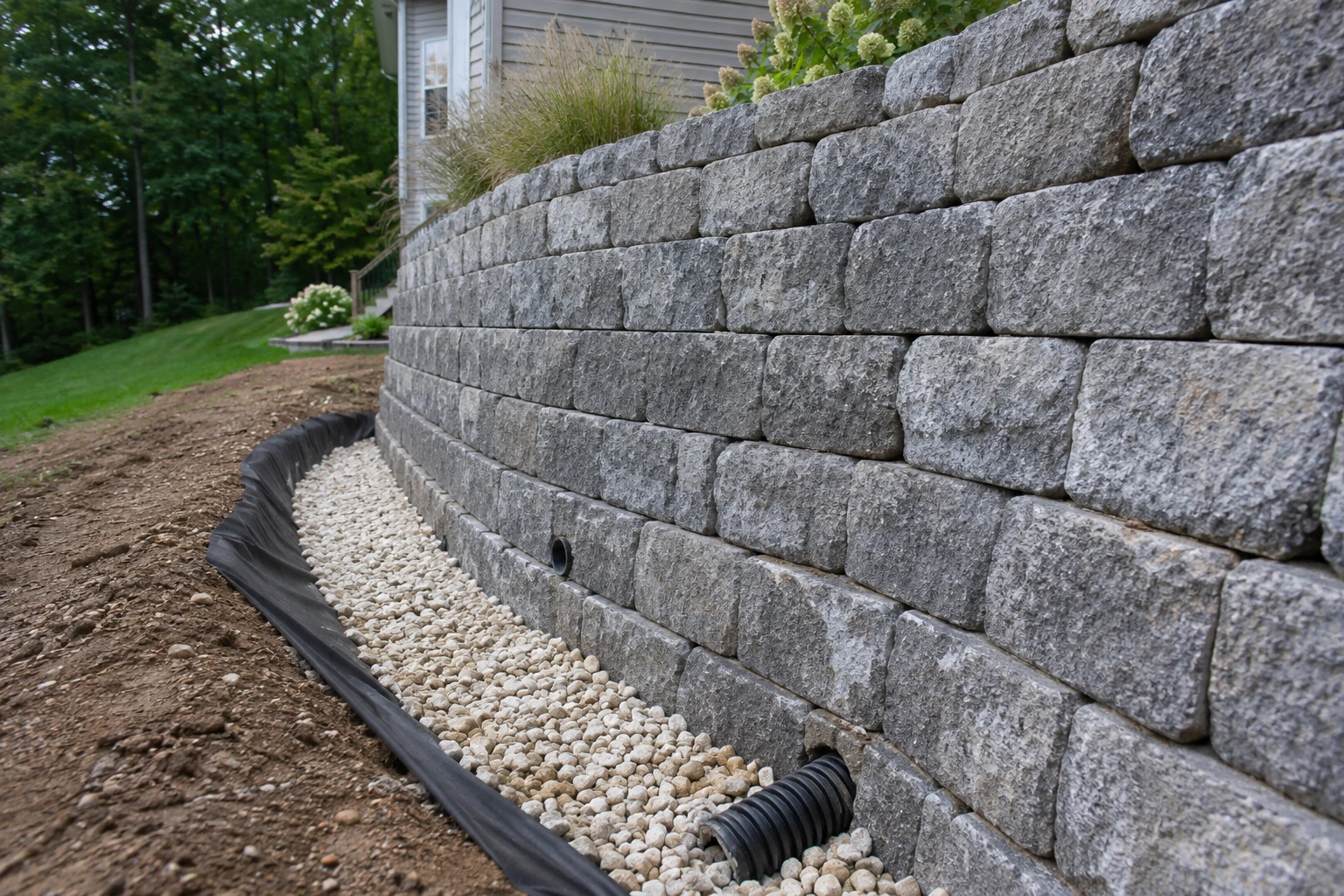
Proper drainage design is one of the most effective ways to reduce pressure on a retaining wall. This may include free-draining backfill, agricultural drainage behind the wall, geotextile fabric to reduce silt blockage, weep holes and surface grading that directs water away from the wall.
Regular maintenance is also important. Drainage pipes that are crushed, blocked by roots or clogged with silt cannot relieve pressure effectively. If cracking or leaning has already appeared, drainage improvements may need to be combined with structural repairs or partial rebuilding.
Soil does not stay perfectly still over time. Across sloping, coastal and clay-influenced sites, changes in ground moisture and soil stability can place extra stress on retaining walls.
When soil becomes saturated, it gets heavier and may lose strength. This increases the lateral pressure behind the wall and can cause the retained soil to slump towards the structure. Expansive clay soils can add further stress because they swell when wet and shrink when dry. Over repeated wet and dry cycles, this movement can gradually push a wall outward, open cracks or create voids behind the wall.
Settlement is another common cause of damage. If the soil beneath the footing was not compacted properly or is too soft to support the wall, the base can drop unevenly. This may show up as stair-step cracking in masonry, uneven leaning or visible separation between wall sections.
On sloping sites, deeper soil movement can also occur. A whole wedge of ground may slowly creep downhill, placing ongoing pressure on the wall. Signs can include a uniform lean, cracks in nearby paving, distorted fences or gaps opening between the back of the wall and the retained ground.
Simply repairing the visible crack or rebuilding the same wall without addressing the soil conditions often leads to the same problem returning.
Not every damaged retaining wall fails because of drainage alone. Several other factors can weaken the structure over time or increase the loads it has to resist.
Large trees and aggressive shrubs planted too close to a wall can cause movement as roots grow and displace soil. Roots may push against footings, panels, blocks or sleepers. They can also enter small joints and cracks, gradually forcing them wider. For new planting near retaining walls, shallow-rooted species and appropriate setbacks are usually safer choices.
Poor construction can also lead to early failure. Common issues include insufficient compaction, inadequate footings, blocks or sleepers installed out of level, missing reinforcement, incorrect tiebacks, low-strength concrete or unsuitable timber. Timber walls may deteriorate faster if the wrong grade of timber was used or posts were not embedded deeply enough into stable ground.
Changes made after the wall was built can also create problems. New paving, driveways, sheds, pools, garden beds or extensions can redirect surface water or place extra load near the top of the wall. If these changes were not allowed for in the original design, the wall may begin to crack, bow or lean.
Some signs of retaining wall damage are more urgent than others. Prompt attention does not always mean full replacement, but it does mean the wall should be assessed before the problem worsens.
Warning signs include:
Horizontal cracking and bulging are particularly concerning because they often indicate pressure from behind the wall. A section that appears to “belly out” may already have inadequate reinforcement or internal failure.
Visible leaning should also be taken seriously, especially where the wall supports a driveway, parking area, building, fence or steep slope. Retaining walls can fail suddenly after heavy rain if the retained soil becomes saturated and drainage is poor.
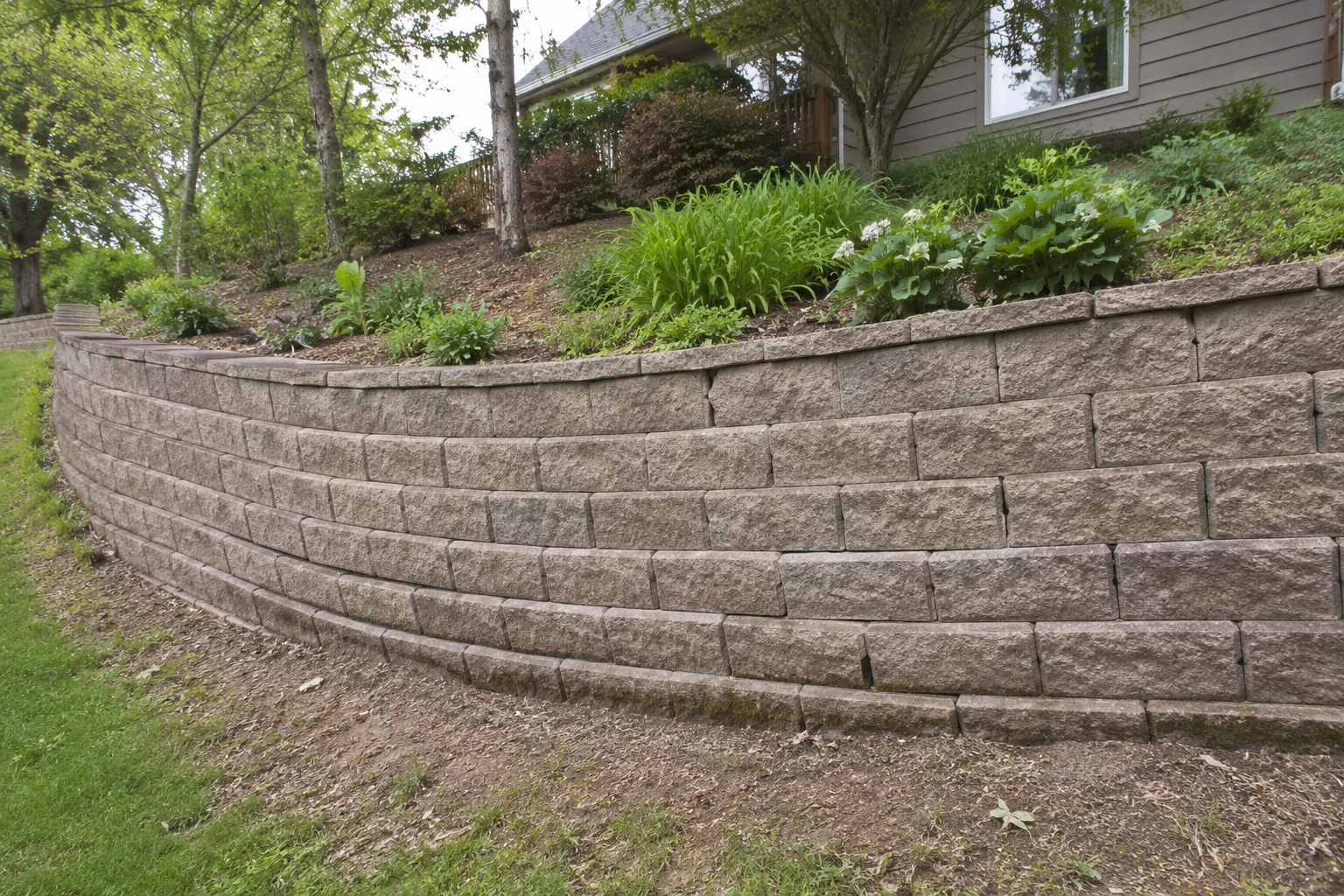
Whether a damaged retaining wall can be repaired depends on the severity of the movement, the wall’s construction and the cause of the damage. Some issues can be stabilised cost-effectively, while others indicate that the wall has failed structurally.
Repair may be possible where the damage is minor to moderate and the wall is otherwise stable. This may include small vertical cracks that are not widening, localised damage to one section, slight movement that has stabilised or drainage problems that can be corrected before major structural failure occurs.
Common repair options include repointing mortar joints, crack repair, drainage upgrades, partial rebuilding, installing additional posts or adding reinforcement. In some cases, drainage improvements can be combined with stabilisation work. However, any attempt to straighten, anchor or reinforce a retaining wall should be assessed carefully to avoid causing further damage.
Full replacement is usually required when the wall is continuing to lean or bulge, has large horizontal or stair-step cracks, has failed footings, contains rotten structural timber, has extensive corrosion or was not designed for the height, soil conditions or loads it is retaining.
Where the original wall was under-engineered or built without adequate drainage, piecemeal repairs may only provide temporary relief. Rebuilding the wall to a suitable design is often the safer and more cost-effective long-term solution.
Retaining walls carry hidden loads, and visible damage does not always show the full extent of the problem. A wall that appears only slightly out of plumb may have saturated backfill, a failed footing or unstable soil behind it.
A retaining wall specialist or structural engineer can inspect the wall alignment, cracking, drainage, footing condition and surrounding site conditions. The goal is to identify the cause of the movement, not just repair the visible symptoms.
Professional assessment is especially important where the wall supports a driveway, structure, boundary fence, steep slope or neighbouring property. In Victoria, some retaining wall work may also require a building permit, particularly where the wall is 1 metre or more in height or is located on or near a boundary where failure could affect adjoining property. Local site conditions, overlays and drainage requirements may also influence what is needed before repair or replacement work begins.
This helps ensure the chosen solution is safe, durable and appropriate for the conditions on the property.
Cracks, bulges and leaning are signs that a retaining wall is responding to forces it may no longer be able to manage safely. The cause may be poor drainage, hydrostatic pressure, shifting soil, construction defects, tree roots, ageing materials or changes to the surrounding site.
The most effective solution depends on understanding why the wall has moved. Cosmetic repairs may hide the problem temporarily, but they will not stop further movement if water pressure, soil instability or poor construction remains unresolved.
Early assessment gives property owners the best chance of controlling damage before it becomes more expensive or unsafe. With the right drainage, repair or replacement approach, a retaining wall can continue to support the surrounding landscape safely and effectively.

