A sandy patch in your garden might look easy to dig, but ease of digging does not necessarily mean the ground will remain stable once excavation begins. Loose sand, buried fill and groundwater can affect how the soil behaves when it is exposed, influencing the excavation method, working space and safety measures required.
Understanding these conditions helps property owners in Mornington Peninsula when planning earthworks and comparing contractor proposals. JBS Excavation & Retaining Walls help assess the practical requirements of a project, but the approach depends on the soil layers, access restrictions and nearby structures.
When comparing providers for excavation in Mornington Peninsula, ask how ground conditions will be assessed, what assumptions underpin the quote and what would trigger a change to the proposed method. A clear proposal should identify known constraints and explain where further investigation may be necessary before work proceeds.
Sand behaves differently when exposed in an excavation than when it is supported by the surrounding ground. Its stability depends on how tightly the grains are packed, the soil layers present and the movement of water through the ground.
Removing soil changes the support available to the remaining material. As a result, even a site that appears straightforward from the surface may require planning before excavation begins.
Sand consists of separate grains whose resistance to movement depends largely on friction and how closely they fit together. Excavation exposes these grains and removes some support from the surrounding soil. Material can then fall, slide or flow into the opening.
Movement may begin with small amounts of sand trickling from an exposed face. However, this can change the excavation's shape and affect the stability of nearby ground. Loads from machinery, stored materials or vehicles close to the edge may increase the risk.
An excavation does not need to be deep to present a hazard. Unsupported faces can fail with little warning, so workers should not enter an excavation or approach an unstable edge without appropriate protective measures. A face that appears intact does not prove it will remain stable.
WorkSafe Victoria’s excavation safety guidance outlines planning considerations and practical measures to reduce the risk of ground collapse.
A compacted driveway, established lawn or dry surface crust can conceal weaker material underneath. The upper layer may hold its shape while a loose layer below moves once exposed. Previously disturbed ground may also contain fill with inconsistent density or a mixture of materials.
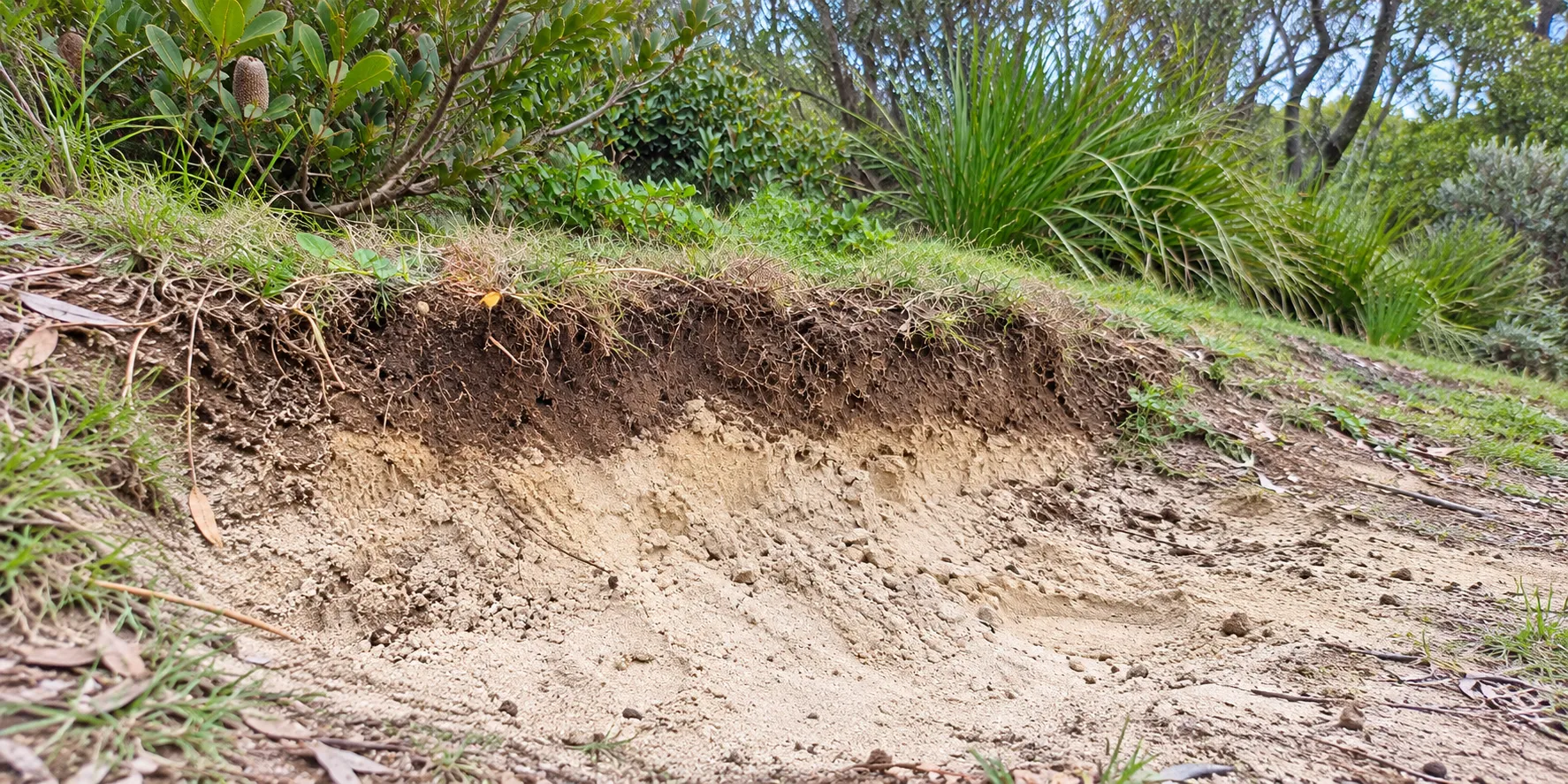
This means the conditions encountered at the start of excavation may differ from those found at greater depths. A contractor may uncover a change in soil type, buried fill or a wetter layer that was not apparent during an initial inspection.
Existing site records and observations can help with planning, but they cannot always establish the full ground profile. Where stability is uncertain, further investigation by a geotechnical professional or engineer may be necessary. This helps determine the conditions that need to be addressed before the excavation method is finalised.
Properties across the Mornington Peninsula do not all have the same soil profile. Sand may occur alongside finer materials, while previous earthworks can introduce fill or create variations in ground density. Conditions can also change across a single property.
Local experience is useful when planning excavation, but experience with nearby projects cannot confirm what lies beneath a particular site. The proposed excavation area must be considered on its own merits.
The discussion of site evaluation before excavation highlights why site-specific information matters. Ask the contractor what is already known about the ground, what remains uncertain and whether additional investigation is needed before work begins.
The finished dimensions of an excavation do not necessarily represent the full area needed to complete the work. Depending on the ground conditions, additional space may be required to manage exposed faces, position machinery, store excavated material and maintain safe access.
On a constrained property, these requirements can influence whether the proposed method is practical. Confirming them early helps prevent access problems and unexpected changes to the project scope.
A project drawing may show the final excavation dimensions without accounting for the temporary space needed during construction. A suitable sloping or stepped excavation profile may require more room than a vertical face, but it depends on the depth and soil’s stability.
Machinery positioning and spoil storage also need consideration. Equipment and excavated material must be placed where they will not create unacceptable loads near vulnerable edges or obstruct the work area.
There is no single excavation profile that suits every sandy site. The appropriate arrangement depends on factors such as soil conditions, excavation depth, groundwater, nearby loads and applicable safety requirements.
Before accepting a quote, ask if the proposed working area has been considered and if enough space is available on the property. Also confirm where excavated soil will be stored or removed and if machinery can reach the work area without creating additional constraints.
Excavating close to a building can affect the ground supporting its footings. Similar concerns may arise near retaining walls, fences and other existing structures. The visible distance between a structure and the proposed excavation does not establish if the work can proceed safely.
Property boundaries can create another limitation. If the working area required for a suitable excavation profile extends beyond the available land, the contractor cannot assume that neighbouring property can be used. Restricted access may also affect machinery selection and the work’s sequence.
Before excavation begins, identify nearby structures, boundary constraints and underground services. Relevant service plans and locating procedures should be checked before digging, as buried electrical cables, water pipes, gas lines and drainage systems can affect safety and the proposed work.
An engineer should assess the requirements where excavation may affect a footing, retaining wall or other structure. Reducing the working area simply to fit within a restricted space is not a suitable substitute for professional assessment. The Building and Plumbing Commission’s guidance on protecting adjoining properties explains when protection work may be required and how the relevant building surveyor assesses those requirements.
Some constrained excavations may require designed ground support rather than additional open space. Whether support is necessary, and which system is appropriate, depends on the excavation, soil conditions, surrounding structures and other site constraints.
Do not assume that every excavation quote includes specialist ground support or engineering services. Ask who will assess the need for support, who will design any required system and who will install it. The proposal should make clear which responsibilities are included in the quoted work and which remain subject to further assessment.
When discussing a project, explain any restrictions involving access, boundaries and nearby structures during the initial conversation. The information in local excavation challenges provides useful background, but decisions about support must reflect the actual site.
A clear proposal should identify whether engineering advice or specialist support is included, excluded or still required. This gives properties a more accurate basis for comparing quotes and understanding potential changes to the project scope.
Water entering an excavation can change the ground conditions and affect whether the original method remains suitable. Groundwater is not simply an inconvenience that can always be resolved by removing the visible water.
The source of the water, how it moves through the soil and its effect on the exposed ground all need consideration. Unexpected seepage may require work to pause while conditions are assessed.
Moisture can change how sand behaves, and lightly damp sand may sometimes appear to hold together better than dry sand. However, this does not establish that an excavation face is stable or safe. Saturation and flowing groundwater can alter soil behaviour, while seepage may carry fine particles out of the surrounding ground.
Groundwater entering from within the soil is also different from rainwater running across an exposed surface. It may continue to enter as excavation progresses and emerge through particular layers or locations. The source and extent of the inflow may not be obvious at first.
The important point is that a method planned for apparently dry ground may no longer be suitable once water is encountered. The contractor needs to assess how the water is affecting the excavation, the working surface and the surrounding soil before deciding whether work can continue.
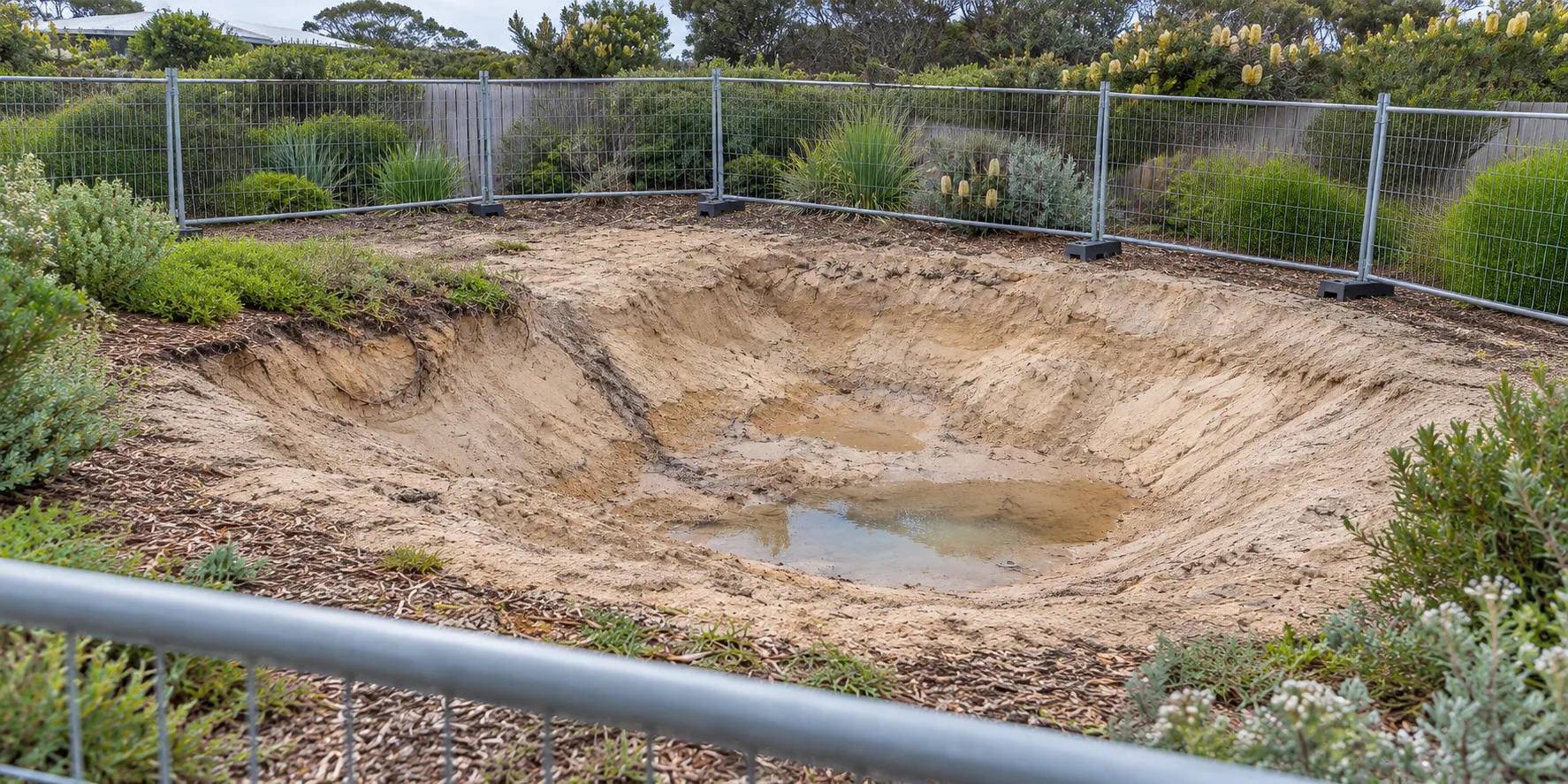
If the contractor encounters conditions that differ from the original assumptions, continuing immediately may create unnecessary risks. Seepage, sand moving with water or changes in an exposed face can indicate that the excavation needs to be secured and reassessed.
A pause does not automatically indicate poor planning. Subsurface conditions are not always fully known before digging begins. What matters is whether the contractor recognises the change, communicates its implications and obtains appropriate advice rather than continuing with a method that may no longer suit the ground.
Before work starts, ask how unexpected groundwater will be handled. Establish who will review the changed conditions, whether a geotechnical professional or groundwater specialist may be needed and how any effect on the programme or cost will be communicated.
Property owners should also avoid entering the excavation to inspect seepage themselves. Any assessment must be undertaken with appropriate safety measures in place.
Removing visible water without understanding how it moves through the soil can create additional problems. Uncontrolled pumping may draw fine particles out of the surrounding ground, contributing to ground loss or affecting nearby structures.
A suitable water management approach must account for the soil profile, the source and rate of inflow, the excavation design and surrounding conditions. Depending on the site, specialist advice may be needed to determine appropriate controls, monitoring or changes to the excavation method.
Pumping should not be treated as a routine addition that automatically makes a wet excavation workable. The method used to manage water must be suitable for the ground conditions and must not introduce unacceptable risks elsewhere on the property.
When comparing proposals, distinguish between allowances for ordinary site conditions and provisions for unexpected groundwater. Ask what the quote assumes about water levels, what findings would require additional assessment and who would approve a revised method if conditions change. These details help clarify the likely scope of work without assuming that every possible ground condition can be predicted in advance.
Sandy soil does not automatically prevent excavation, but it can affect the working area, ground support requirements and response needed if groundwater appears. The most useful starting point is a clear understanding of the proposed excavation, the surrounding structures, available access and any uncertainties about the ground.
Before approving a proposal, confirm that underground services have been considered, machinery access and spoil storage are practical and any required engineering or specialist assessments have been identified. Ask how unexpected changes in soil conditions or groundwater will be managed and how any resulting changes to the scope will be communicated.
JBS Excavation & Retaining Walls can discuss the requirements of a project and help identify the site constraints that need consideration. By addressing these questions before work begins, property owners can compare proposals and make decisions about the excavation method, safety requirements and additional costs.

