A well-built retaining wall can last for decades, but its lifespan depends on more than age alone. Materials, construction quality, soil conditions, drainage and ongoing maintenance can all affect how long a wall remains stable and structurally sound.
For property owners considering retaining walls in Mornington Peninsula, knowing what affects longevity can help with planning, maintenance and recognising potential problems early. Different materials also have different expected lifespans, while poor drainage or ground movement can cause premature deterioration.
JBS Excavation & Retaining Walls provides retaining wall solutions designed around the conditions and requirements of each site. Knowing the expected lifespan of different wall types and recognising early signs of deterioration can help property owners plan maintenance, repairs or replacement before problems become more serious.
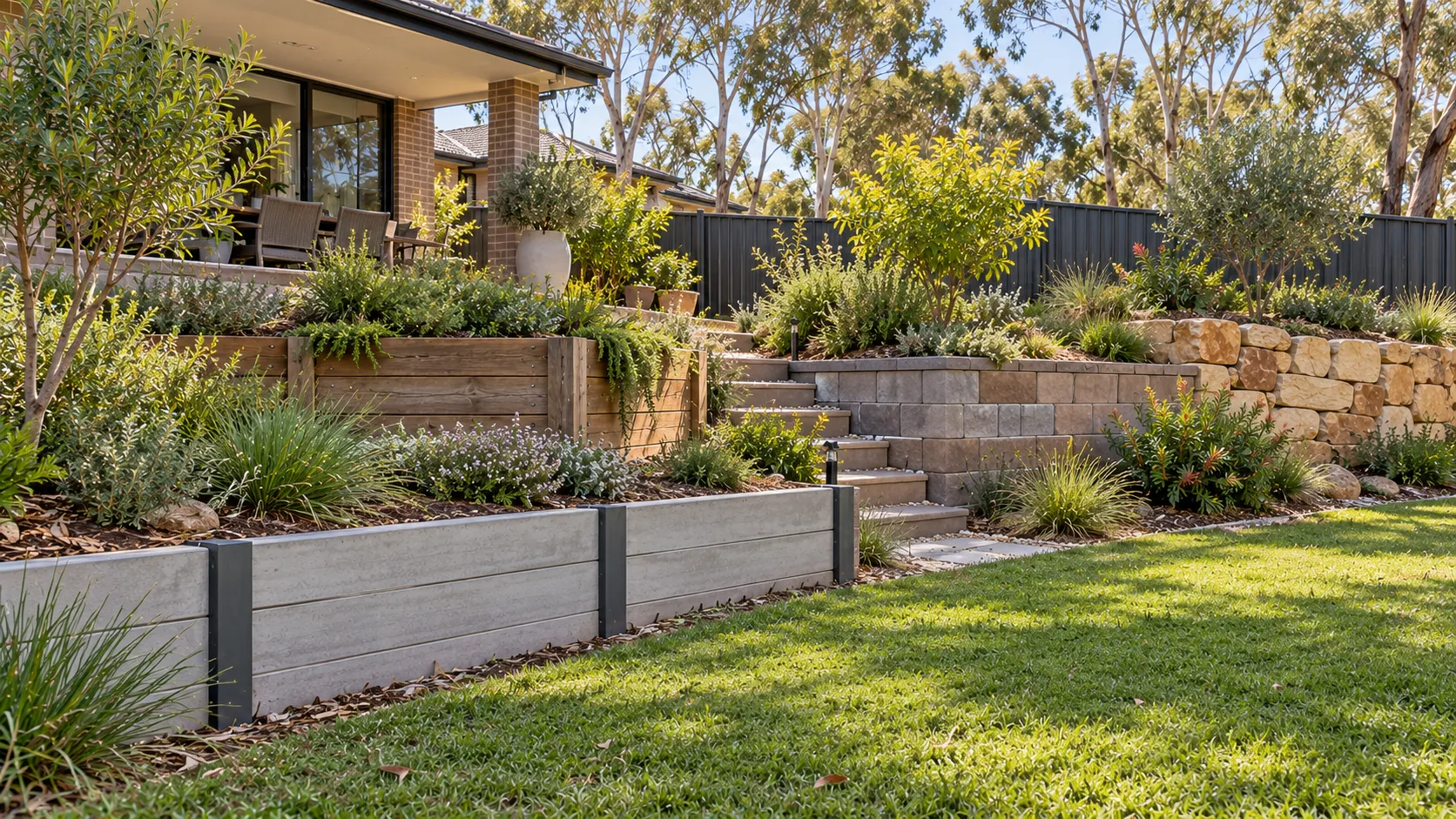
The lifespan of a retaining wall depends on its material, construction quality, drainage, soil conditions and exposure to moisture and movement. Some well-built walls can remain serviceable for 50 years or more, while others may require major repairs within 10 to 15 years. These are general estimates, as actual lifespan varies depending on site and construction conditions.
Comparing different retaining wall materials can help property owners choose an option suited to the site, budget and expected service life.
Concrete retaining walls can provide a long service life when properly designed and constructed.
Segmental concrete block retaining walls last around 30 to 50 years when correctly installed. Their longevity depends on a stable, well-compacted base, suitable backfill and effective drainage, with geogrid reinforcement where required.
Engineered masonry walls can also remain structurally sound for several decades. Poor drainage, inadequate foundations or blocks not designed for retaining applications can reduce their lifespan.
Timber retaining walls have a shorter lifespan than concrete or masonry systems.
Constant moisture, poor drainage, fungal decay and insect activity can shorten the lifespan of timber walls considerably.
Well-built natural stone and rock retaining walls can last 50 years or more, where durable materials, stable foundations and effective drainage are used. Large rock or boulder walls can remain stable for decades when properly positioned and protected from erosion or undermining.
Material selection is only one part of retaining wall longevity. Proper foundations, drainage and construction methods are important in determining how long a wall can perform effectively.
A retaining wall can last around 15 to 50 years or more, depending on its material, construction quality, drainage, soil conditions and exposure. Timber walls generally have shorter service lives, while well-built concrete, masonry and stone walls can remain structurally sound for several decades.
Factors such as sloping ground, coastal exposure, rainfall, soil movement and drainage can affect how long a wall lasts. Proper design and construction for the specific site can help reduce premature deterioration and support longer-term performance.
Age alone is not a reliable measure of a retaining wall's condition. A well-maintained older wall may remain stable, while a newer wall can develop problems if drainage, foundations or construction quality are inadequate. Regular inspections can help identify issues before major repairs or replacements are required.
A retaining wall's lifespan depends on several factors, including the material, construction quality, drainage, soil conditions and ongoing maintenance. A well-designed wall built for its specific site can remain stable for decades, while poor foundations, inadequate drainage or unsuitable materials can lead to premature deterioration.
The main factors affecting retaining wall longevity include:
Understanding the common causes of retaining wall failure can help property owners address drainage, foundation and construction problems before they worsen.
These factors are closely connected. Suitable materials alone cannot guarantee a long lifespan if the wall has poor drainage or an unstable foundation, which is why site conditions and construction methods need to be considered together.
Soil and ground conditions affect how much pressure a retaining wall needs to withstand and how stable its foundation remains. Stable, well-compacted ground provides a more reliable base, while expansive, loose or poorly drained soils can increase movement and place additional stress on the wall.
Different soils respond differently to changes in moisture. Clay can expand when wet and shrink as it dries, creating repeated movement behind the wall. Loose or poorly compacted soil and imported fill can also settle, creating voids or uneven pressure.
Changes in soil moisture can make these issues more pronounced on sloping blocks where ground movement may place additional pressure on the structure.
Settlement beneath part of a retaining wall can cause sections to move at different rates, resulting in cracking, leaning or separation. Sloping sites can be sensitive to movement, while excavation, nearby construction, vehicle loads and changes to surface drainage can also alter ground conditions.
The wall should be designed for the site's soil characteristics, height, slope, drainage and any additional loads above it. A system suitable for a stable, level site may require different foundations, reinforcement or drainage measures on a steep or unstable block.
Assessing ground conditions before construction can help identify potential issues and support a more stable foundation for the wall.
Good drainage can extend a retaining wall's lifespan by preventing water from building up behind the structure. Trapped water creates hydrostatic pressure that adds to the load on the wall, increasing the risk of cracking, bowing, leaning and foundation movement.
Effective drainage typically includes free-draining aggregate, perforated agricultural pipe and suitable outlets or weep holes where required. Keeping these systems clear is important, as blocked drainage can also contribute to timber rot, steel corrosion, soil erosion and settlement.
Drainage needs to suit the site's soil, slope and rainfall conditions. Directing surface water away from the wall and addressing pooling or blocked outlets early can help reduce water-related stress and support longer-term stability.
Broader stormwater management should also be considered so runoff does not create erosion, pooling or excessive pressure around the retaining wall.
Yes, regular maintenance can help extend a retaining wall's service life by identifying problems before they become major structural issues. While maintenance cannot fix poor design or a failed foundation, keeping drainage clear, managing water and monitoring the wall can reduce unnecessary stress and slow deterioration.
Blocked agricultural pipes, weep holes and drainage outlets can allow water to build up behind the wall and increase hydrostatic pressure. Clearing debris and vegetation from outlets and checking for pooling after heavy rain can help keep water moving away from the structure.
Regular inspections can help identify cracks, leaning, bulging, loose blocks, timber deterioration and soil erosion early. Changes in cracks or visible movement should be assessed promptly if the problem is becoming more noticeable.
Leaking pipes, excessive irrigation, large roots and additional loads like vehicles, structures or heavy landscaping can place extra pressure on a retaining wall. Managing these factors can help reduce unnecessary stress and protect the wall's condition.
Routine maintenance is useful where walls are exposed to rainfall, sloping ground or changing soil moisture. Addressing minor issues early can help extend the wall's useful life and reduce the likelihood of more extensive repairs or replacement.
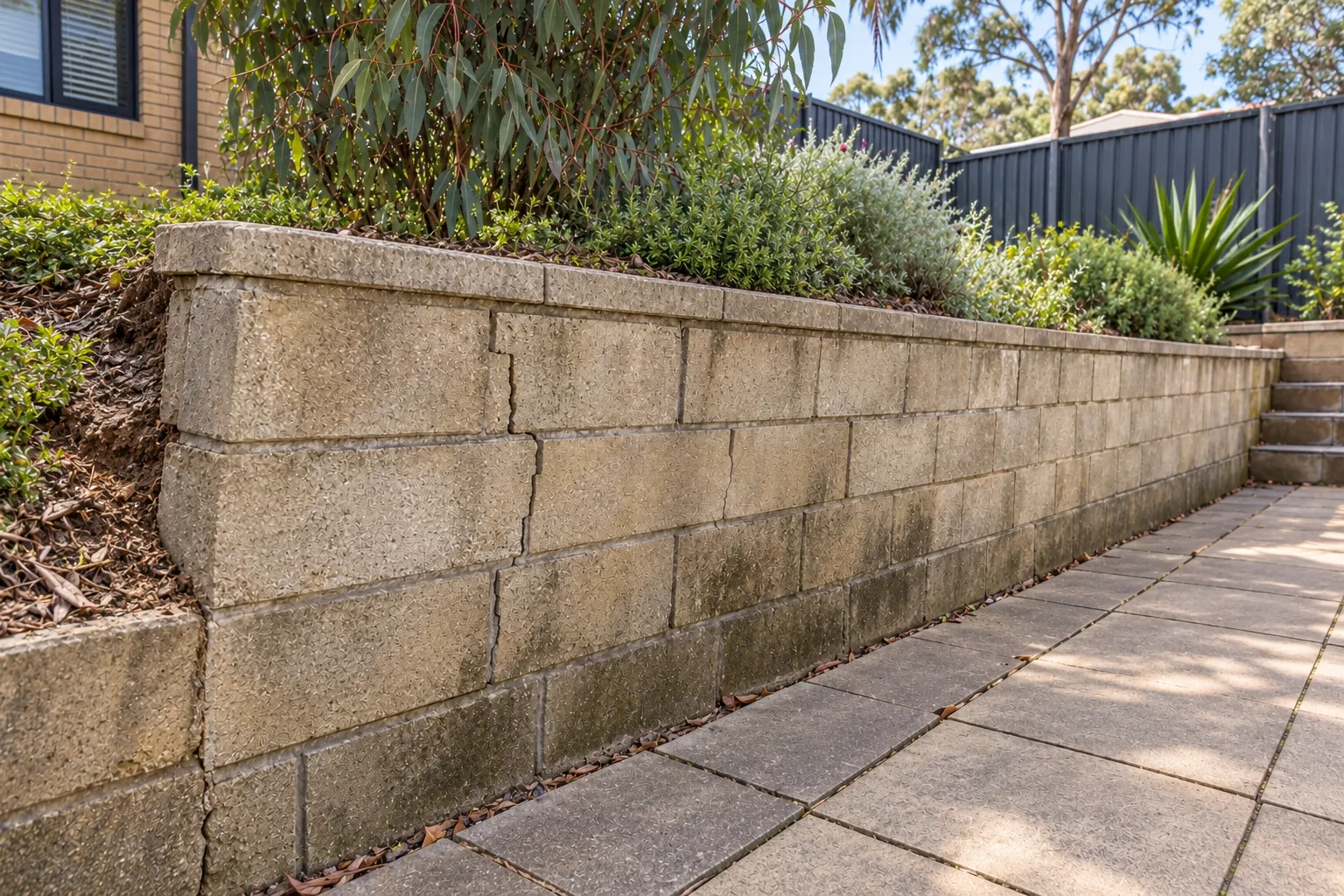
Early signs of deterioration can help identify retaining wall problems before they become more serious. Cracking, movement, drainage issues and changes in the surrounding soil are all reasons to inspect the wall more closely. Checking the wall periodically and after heavy rainfall can help identify changes early.
New, widening or recurring cracks can indicate movement or increasing pressure behind the wall. Horizontal cracks, separation between sections and stair-step cracking in masonry may be signs of structural movement.
Spalling concrete, exposed reinforcement, rotting timber or soft areas can also indicate material deterioration. Changes in the size or pattern of cracks should be assessed rather than treated as purely cosmetic.
A retaining wall that begins to lean, bow or bulge may be experiencing excessive soil or water pressure, foundation movement or failure of its reinforcing components. Noticeable changes in alignment after heavy rain should be treated as a warning sign.
Movement can also create gaps between the wall and nearby paving, fencing or other structures. Monitoring these gaps over time can help identify whether the problem is progressing.
Blocked drainage, pooling water, damp staining and erosion around the wall can indicate that water is not being managed effectively. Trapped water increases pressure behind the wall and can accelerate deterioration.
Sunken ground, soil washouts, subsiding paving or gaps around the top of the wall can also indicate movement or erosion. Addressing drainage and soil problems early can help prevent further damage and reduce the risk of more extensive wall failure.
Yes, a retaining wall can sometimes be repaired if the damage is localised and the main structure, foundation and drainage remain sound. The right approach depends on the wall's condition, material and the cause of the damage.
Repairs may be suitable for:
Replacement may be necessary when:
Soil conditions, drainage, slope and nearby loads can all affect whether repair is practical. Fixing the underlying cause is important, as repairing visible damage without addressing issues such as poor drainage or ground movement may only provide a temporary solution.
A retaining wall's lifespan can be extended through suitable design, effective drainage, quality construction and regular maintenance. Addressing problems early can help prevent minor deterioration from developing into major structural damage.
Vital ways to protect the wall include:
Local soil, slope and rainfall conditions should be considered when designing and maintaining the wall. Proper construction combined with ongoing care can help maintain stability and extend its useful service life.
A retaining wall may need to be replaced when structural damage is too extensive to repair safely or when the underlying cause cannot be effectively corrected. Age alone does not determine whether replacement is necessary, but movement, deterioration, drainage failure and foundation problems are important warning signs.
Progressive leaning or bulging can indicate that the wall is no longer adequately resisting soil or water pressure. Replacement may be necessary when movement is significant, continues to worsen or is accompanied by cracking, separation or foundation movement.
Widespread cracking, displaced sections and gaps between the wall and surrounding structures can indicate serious deterioration. Timber walls with extensive rot, insect damage, splitting or deteriorated posts may also require replacement rather than localised repairs.
Persistent drainage problems can increase pressure behind the wall and contribute to movement, erosion and foundation failure. Block displacement, collapsed sections, exposed reinforcement, severe concrete spalling or repeated movement despite repairs may indicate that rebuilding is required.
The condition of the wall, surrounding soil, drainage and any loads above it should be considered before deciding between repair and replacement. Where movement or multiple signs of failure are present, a professional assessment can help determine the appropriate approach.
The lifespan of a retaining wall depends on more than its age. Sound design, suitable materials, proper drainage, quality construction and regular maintenance keep a wall stable and structurally sound for many years.
JBS Excavation & Retaining Walls understands the importance of designing and building retaining walls to suit the conditions of each property. With the right approach and timely attention to signs of movement or deterioration, a retaining wall can provide reliable support while helping protect the surrounding land and structures.

