Tight access excavation can make difficult residential projects possible, even when space is limited. Pool installations, rear extensions, retaining walls and drainage upgrades often require machinery to work through narrow side passages or confined areas, making careful planning essential from the outset.
JBS Excavation & Retaining Walls helps property owners assess the practical challenges of restricted sites before excavation begins. Access limitations, existing structures, ground conditions and machinery requirements all need to be considered to minimise delays, damage and unexpected costs.
For homeowners planning excavation in Mornington Peninsula, factors such as underground services, depth, spoil removal, weather and neighbouring properties should also be assessed. Understanding these considerations early helps ensure the right equipment and excavation methods are selected for a safer, smoother project.
Tight access excavation begins with understanding exactly how machinery, workers, spoil and materials will move through the property. A route that appears accessible may still have narrow pinch points, overhead obstructions or insufficient space for machinery to turn and operate safely.
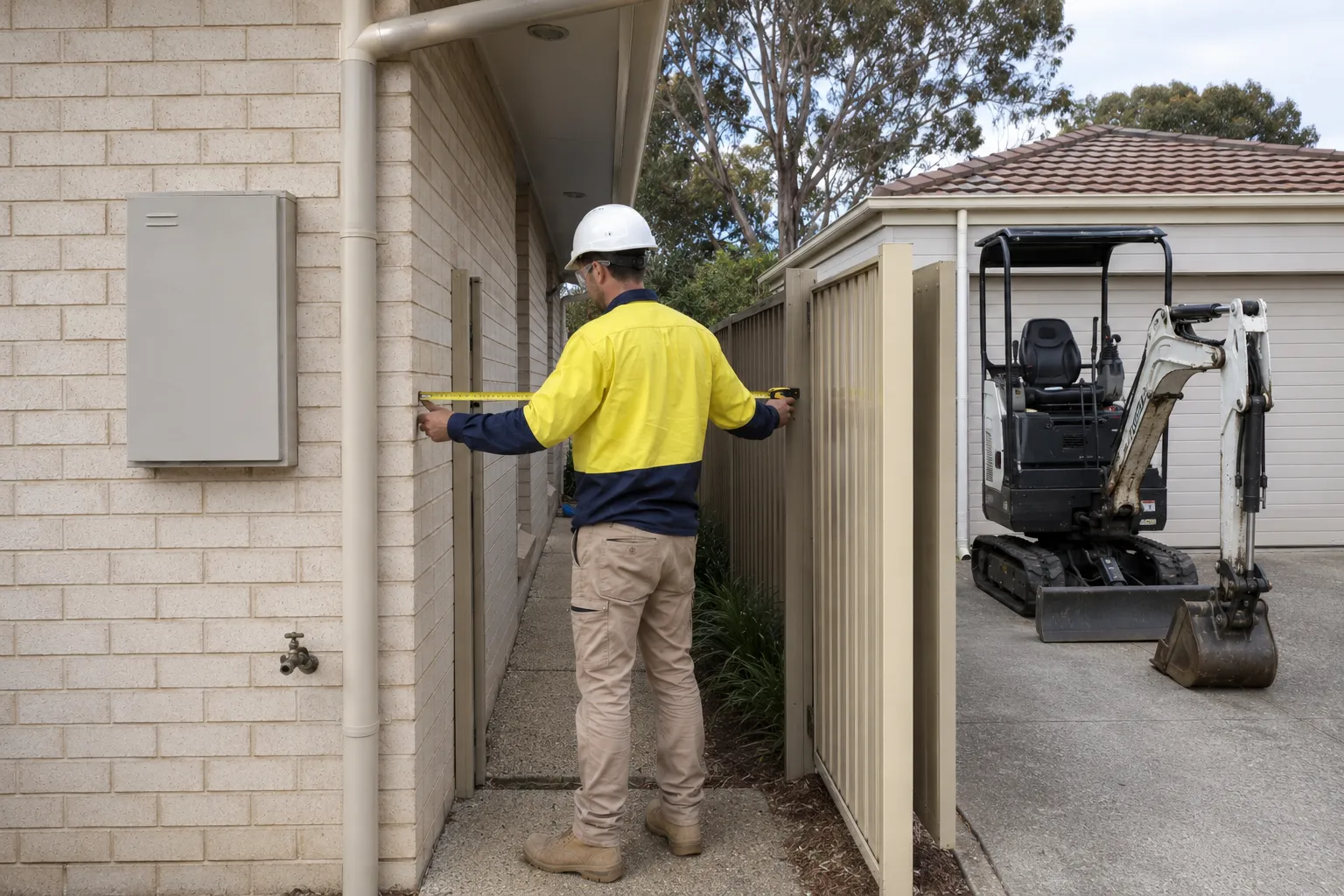
Before excavation begins, assess the route from the street or driveway to the work area and check:
If access is extremely restricted, smaller machinery, additional spoil-removal trips or limited manual handling may be required. Identifying these constraints early allows the contractor to develop a practical excavation plan before work starts.
Before tight access excavation begins, check whether council approval, permits or other regulatory requirements apply. Requirements can depend on factors like excavation depth, changes to ground levels, proximity to boundaries, retaining walls, drainage works and the wider project. Checking the relevant local requirements early can help prevent delays or changes once work is underway.
Excavation associated with pools, extensions, retaining walls or drainage upgrades may also involve additional documentation or engineering advice, particularly when work is close to existing structures or boundaries. The contractor can help identify when professional or regulatory input is required before excavation proceeds.
Confirm any permissions for using public areas, such as placing machinery, spoil, or skips on a road or nature strip, beforehand. Organising these requirements early helps the excavation proceed with fewer interruptions and unexpected costs.
Selecting the right machinery is essential for tight access excavation. The equipment needs to fit through the narrowest access point while still providing enough reach, digging depth and stability to complete the work safely. The smallest machine that can enter the property is not necessarily the most suitable option.
The contractor should assess the narrowest gate, pathway or opening, along with overhead clearances and turning space. These measurements help determine which machines can safely enter and operate within the available area.
The required digging depth, reach, bucket size and ground conditions should all be considered. A machine that fits the site still needs enough power and capability to complete the excavation efficiently.
Machinery should be suitable for existing driveways, paving, decking and landscaping. Rubber tracks, ground mats or other protective measures may help reduce the risk of cracking, rutting or other surface damage.
Equipment must be positioned safely when excavation is close to foundations, retaining walls, property boundaries or sloping ground. The machine should be able to operate without placing unnecessary pressure on unstable areas.
If trucks cannot reach the excavation area, smaller tracked dumpers, motorised wheelbarrows or other material-handling equipment may be needed to move spoil through the restricted site. This should be planned alongside the excavator and overall site layout.
Ground conditions and excavation depth can affect the safety, equipment and cost of a tight access project. Soil type, moisture, rock, existing fill and changes in ground level should be assessed before excavation begins, particularly where work is close to buildings, retaining walls or property boundaries.
A site assessment should consider:
Ground conditions can also change as excavation progresses. Rock, unstable fill or groundwater may appear below the surface and require the excavation method or equipment to be adjusted. Discussing how unexpected conditions will be managed beforehand gives property owners a clearer understanding of potential changes to the timeframe and cost.
Underground services and hidden hazards need to be identified before tight access excavation begins. Confined spaces provide little room to manoeuvre, so damaging electricity, gas, water, sewer or telecommunications services can create serious safety risks, property damage and costly delays.
Property owners can also learn more about how contractors excavate safely around underground utilities, including service locating, potholing and controlled excavation methods.
Before excavation, the contractor should assess and clearly identify:
Where services are close to the excavation, careful exposure using suitable methods may be necessary before machinery proceeds. Shoring, benching, battering or other controls may also be required where ground conditions or excavation depth create additional risks.
Tight access excavation often takes place close to neighbouring homes, fences, retaining walls, driveways and other structures. Before work begins, the contractor should inspect nearby areas for existing cracks, movement or other signs of weakness and consider how excavation depth, soil conditions and machinery vibration could affect them.
A thorough site evaluation before excavation can also identify soil, drainage, slope and boundary constraints that may affect access, equipment selection and the sequence of work.
The actual property boundary should also be confirmed rather than assuming a fence marks the exact boundary. Photographing nearby structures before excavation can provide a useful record of their existing condition. Where shared access or neighbouring properties may be affected, machinery movements, working hours, spoil removal and the expected timeframe should be discussed beforehand.
Taking these precautions helps minimise the risk of ground movement, property damage and disputes while creating a safer and more controlled work environment.
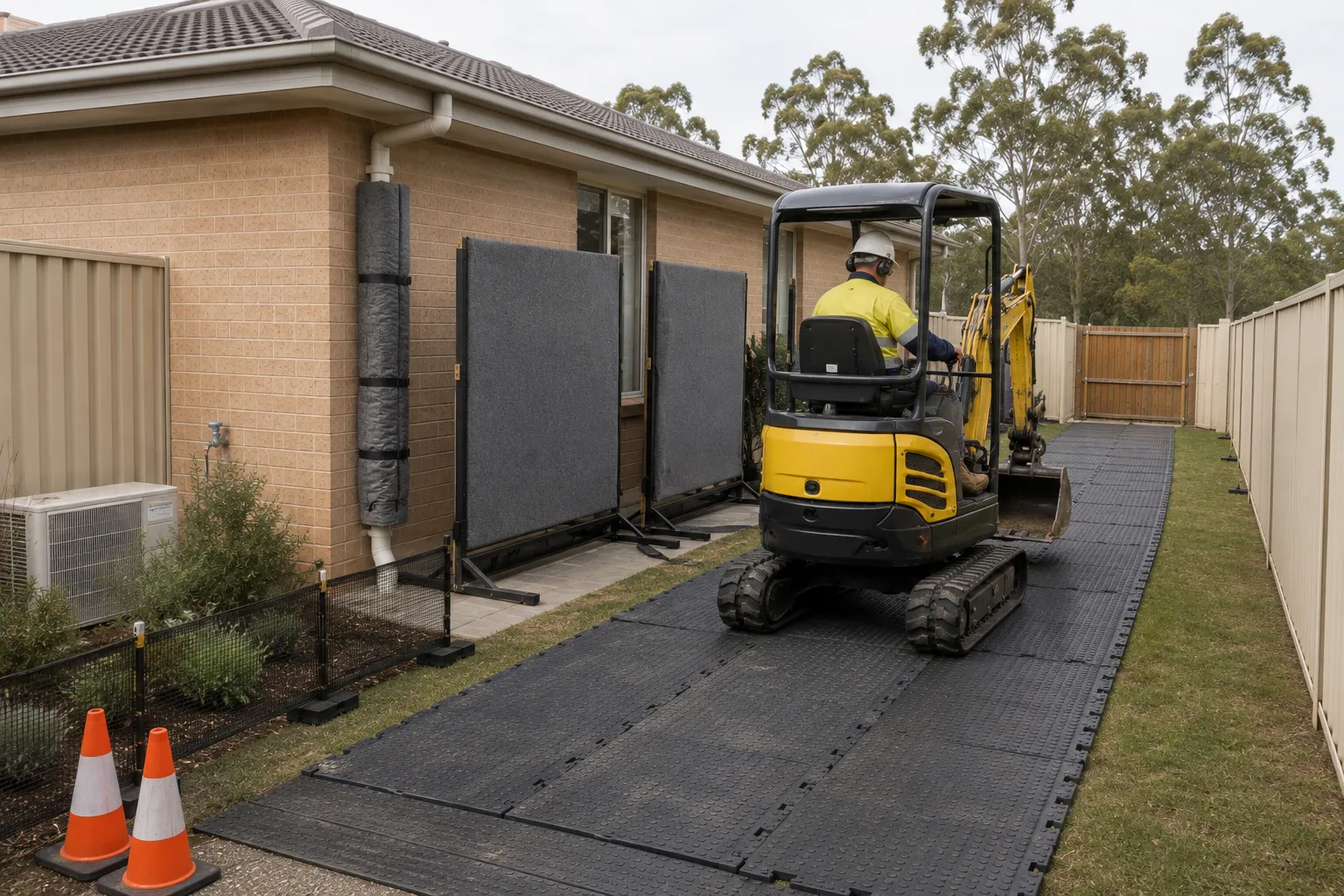
Tight access excavation can bring machinery close to fences, buildings, gardens, driveways and other vulnerable areas. Preparing the site beforehand helps prevent accidental damage, protect access routes and keep the excavation area organised and safe.
Use suitable mats, boards or padding along narrow access routes and around fences, walls, driveways, pavers and other surfaces that could be damaged by machinery.
Clear plants, furniture and other obstacles from machinery paths. Ground protection can be used over lawns where necessary, while tree roots and branches should be protected from unnecessary damage.
Assess nearby retaining walls, decks, garages and foundations for signs of weakness. Additional support or engineering advice may be required where excavation could affect their stability.
Remove unnecessary obstacles and confirm that gates, pathways and other access points are ready for machinery. If fencing needs to be temporarily removed, establish who will handle its removal and reinstatement.
Keep stockpiles away from fences, retaining walls, buildings, drainage paths, gardens and tree roots. Where space is limited, arrange regular spoil removal rather than allowing large amounts of soil to accumulate.
Taking these steps before excavation starts helps protect the property and surrounding areas while reducing the likelihood of damage, delays and unnecessary repair costs.
Tight access excavation often leaves little room for storing excavated soil, while materials for retaining walls, drainage or construction also need to reach the work area. Planning both movements before excavation begins helps prevent blocked access, unnecessary handling, property damage and project delays.
Before work starts, the contractor should estimate the volume and type of spoil, determine whether it will be reused or removed from site and confirm suitable disposal arrangements. Truck size and loading areas should match the available access, with smaller vehicles, skip bins or more frequent collections used where space is restricted.
EPA Victoria provides guidance on managing and disposing of waste soil, including soil classification, transportation and the use of facilities lawfully authorised to receive it.
Material deliveries should be scheduled around the excavation sequence so essential items arrive when needed rather than taking up valuable working space. Staged deliveries of drainage materials, wall blocks, aggregate and backfill can keep the site organised and allow machinery and vehicles to move safely throughout the project.
Weather can temporarily change the condition of a site and affect whether tight access excavation can proceed safely. Rain can soften soil, create muddy access routes and increase the risk of machinery damage, ground movement and unstable excavation walls.
Before excavation starts, consider:
If the ground is excessively wet or unstable, postponing excavation may be safer than risking property damage, bogged machinery or excavation failure.
Wet conditions can cause rutting and damage to lawns, gardens, paving and other surfaces. Ground protection mats or temporary tracks may help distribute machinery loads where required.
Water should also be prevented from collecting in the excavation or flowing towards neighbouring properties. Temporary drainage or pumping may be necessary in some situations, while spoil should be positioned away from drainage paths and stormwater systems. Allowing some flexibility in the schedule gives the contractor room to respond safely if conditions change.
Before tight access excavation begins, the scope, access arrangements, machinery, site protection and costs should be clearly discussed with the contractor. Confined sites leave little room for changes once work is underway, so confirming the details beforehand can help prevent delays, misunderstandings and unexpected expenses.
Before work starts, confirm:
Having these details agreed before machinery arrives gives the property owner and contractor a clear plan and helps the excavation proceed safely and efficiently.
Tight access excavation requires more than simply getting machinery into a restricted space. Assessing access, machinery requirements, ground conditions, underground services, neighbouring structures, weather and spoil removal before work begins can help reduce the risk of damage, delays and unexpected costs.
JBS Excavation & Retaining Walls can assess the practical requirements of restricted residential sites and determine suitable methods and equipment for the conditions. With thorough preparation and a practical approach, even challenging access conditions can be managed safely and efficiently, providing a stronger foundation for retaining walls, landscaping, pools, drainage and other property improvements.

